

Mobile App
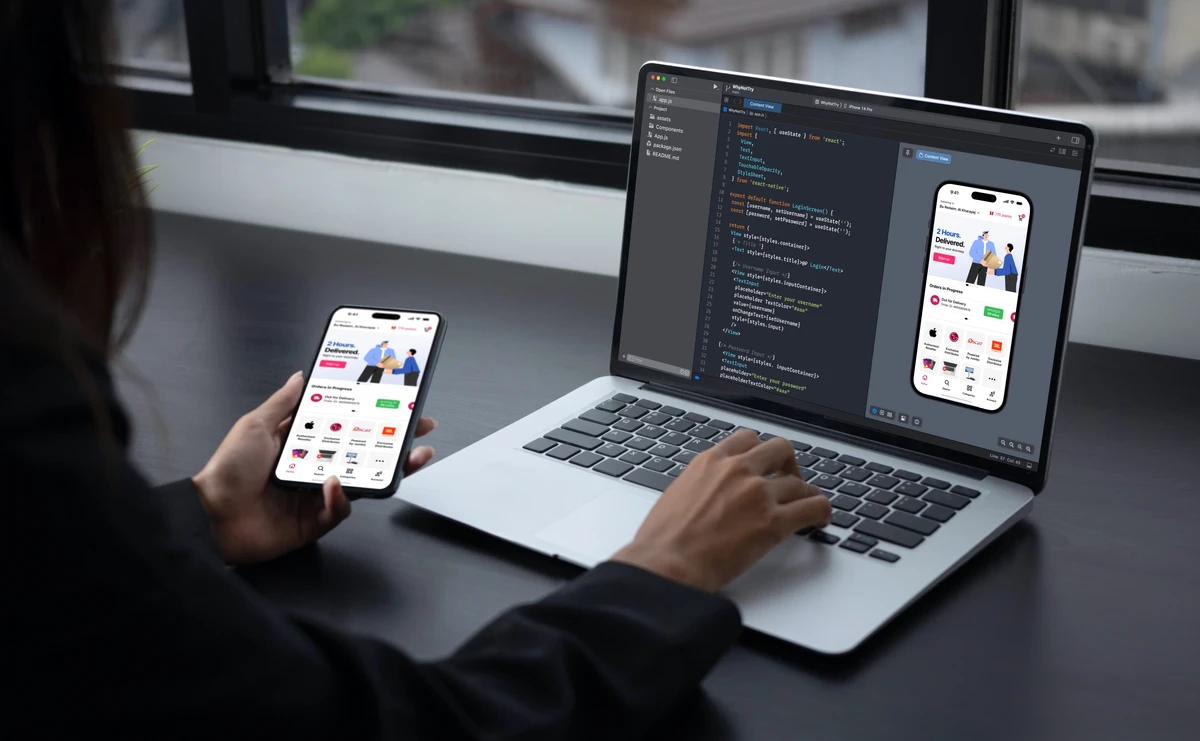
In recent years, the use of smartphones has become an integral part of our lives. People shop, place orders, carry out banking transactions, book taxis, receive education, and manage their daily tasks through mobile applications. This shift has also had a direct impact on how businesses operate. While a professional website was once considered the primary digital platform for companies, today, in many industries, a mobile application is no longer an additional advantage but has become an essential tool for business growth.
A mobile application creates a continuous connection between a business and its customers. Through the application installed on their phone, users can access your services at any time, stay informed about promotions, place orders, and communicate with you more conveniently. This not only increases customer satisfaction but also has a positive impact on increasing sales.
Does Every Business Need a Mobile App?

The answer to this question depends on the business model. For some companies, a professionally designed website is sufficient. Other businesses, however, gain significant benefits from a mobile application because they provide services that are used on a daily basis.
A mobile application is considered an especially effective solution for the following industries:
• Online stores
• Restaurants and delivery services
• Taxi and logistics platforms
• Tourism and hotel reservation systems
• Educational platforms
• Clinics and medical centers
• Banking and financial services
• CRM and ERP systems
• Corporate internal management platforms
• Subscription-based services
If your users regularly use your services, developing a mobile application can be considered a more worthwhile long-term investment.
Main Types of Mobile Applications
One of the first decisions to be made when developing a mobile application is choosing the right technology. Each technology has its own advantages and specific use cases.
Native Mobile Applications
Native tətbiqlər Android və iOS üçün ayrıca hazırlanır. Android üçün əsasən Kotlin və ya Java, iOS üçün isə Swift Programming languages are used to develop these applications. This type of application can make maximum use of all the device’s capabilities.
Advantages:
• Highest performance
• Maximum security
• Full integration with the camera, GPS, NFC, Bluetooth, and other system features
• Offline functionality
• Suitable for high user loads
Native applications are considered the most suitable choice for banking systems, payment platforms, mapping services, and projects that require high performance.
Hybrid Mobile Applications
Hybrid applications are developed for both Android and iOS using a single codebase.
Most commonly used technologies:
• Flutter
• React Native
This approach significantly reduces the development time and budget of the project.
Advantages:
• A single codebase
• Faster development process
• Lower budget
• Simultaneous access to both platforms
If the project is of medium complexity and the main goal is to enter the market in a short period of time, hybrid applications are the most optimal choice.
Progressive Web App (PWA)
A PWA is not a traditional mobile application. It is a website that behaves like a mobile application. The user does not download the application from an app store. Instead, they simply open the website and, if they wish, add it to their phone’s home screen.
Advantages:
• More cost-effective to develop
• No App Store or Google Play approval is required
• Updates are performed automatically
• Lightweight and fast
PWA is an excellent choice, especially for corporate websites, news portals, restaurants, reservation systems, and small and medium-sized businesses.
Cross-Platform Applications
This term is often used interchangeably with hybrid applications.
This term is often used interchangeably with hybrid applications.
For most startups and medium-budget projects, the cross-platform development model provides an ideal balance between cost and performance.
Which Mobile Application Is Right for Your Business?
Not all projects should be developed using the same technology.
If the goal is maximum speed, high security, and the ability to serve millions of users, native applications are more suitable.
If you want to start the project in a short period of time, develop an application for both Android and iOS simultaneously, and optimize your budget, cross-platform applications developed with Flutter or React Native are a more suitable option.
If the main goal is to create a mobile app-like experience and the application does not require complex functionality, a Progressive Web App may be sufficient.

Key Factors That Determine the Success of a Mobile Application
A good mobile application is not just about having a beautiful design.
A successful application:
• should work quickly;
• should have a simple and intuitive interface;
• should meet security standards;
• should work seamlessly across different screen sizes;
• should properly manage push notifications;
• should have a scalable architecture that supports future development.
In addition, ensuring that the application meets the requirements of the App Store and Google Play Store, optimizing its performance, and providing regular technical support are also important factors for long-term success.
Stages of Mobile Application Development
A professional mobile application project is usually carried out through the following stages:
• analysis of business needs;
• preparation of technical specifications;
• UI/UX design development;
• programming;
• API integrations;
• testing phase;
• publishing on the App Store and Google Play Store;
• technical support and further development.
This approach ensures that the project is more stable, secure, and sustainable in the long term.
Conclusion
Developing a mobile application is more than just a technological innovation. A well-planned mobile application strengthens your business’s connection with customers, makes your services more accessible, and can have a real impact on increasing sales. The key is not to choose the same technology for every project, but to determine a solution that aligns with your business goals, budget, and future development plans.
At Interactive Media, we develop Native, Flutter, React Native, and Progressive Web App solutions for Android and iOS platforms. From project analysis to design, development, publishing, and technical support, we professionally manage the entire process. This approach provides you with more than just a mobile application — it delivers a digital solution that supports the long-term growth of your business.