


Website Development
Regardless of whether a business operates online or offline, most businesses today are strengthening their presence on the internet. One of the first steps toward this is having a professional website. By developing a website, you can provide detailed information about your products or services to potential customers, build trust, establish direct communication with clients, and create a strong foundation for your marketing activities. We can provide professional support by developing a website in any format that suits your business and industry.
In addition, if you want your website to achieve premium performance online, you can explore our other services. These include improving your visibility on Google and other search engines and increasing your presence in search results, gaining visibility on YouTube, Facebook, and other social media platforms, and obtaining detailed insights into your monthly website visitors, how they find you, and more.
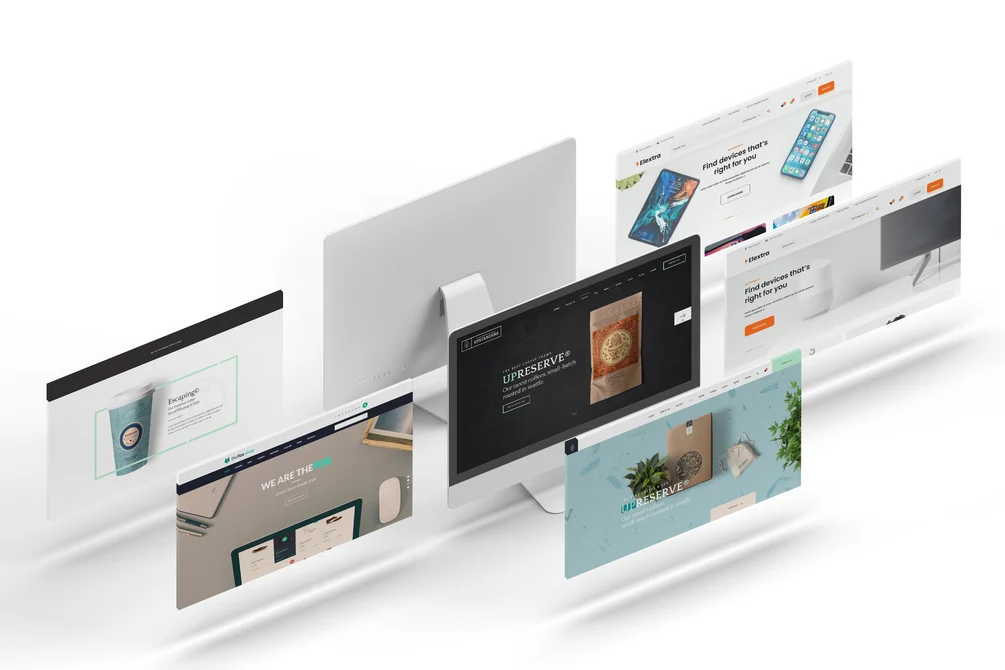
By entrusting us with the development of your website, you gain the following benefits:
- Modern-looking and fast website
- Responsive design (desktop, tablet, and mobile)
- Domain registration
- High-performance hosting (server) package
- SSL (security) certificate for your website
- Registration with Google and other search engines
- Website development optimized for on-page SEO
- Creation of business pages on major social media platforms
- Website design customized to your requirements
- Professional business email addresses linked to your domain
Website Development Process
1. Website Information Gathering and Analysis
During the initial website planning stage, we will clarify all the information that is necessary or relevant for your website. To do this, we can analyze websites you use as references. Be prepared to answer a number of questions, as your answers will later form the website’s technical specification. The technical specification also serves as a detailed description of the website and its requirements.
2. Website Planning
The information gathered will greatly assist us in planning your website during the development process. At this stage, we will do the following:
- Creating the website structure.
A list of the main topics and sections of the website is prepared, based on which a clear and user-friendly navigation system is created. - Technology selection.
During the website development process, we determine which interactive elements, Flash components, or content management systems are most suitable for the project. - Determining supported devices.
As more users access websites from mobile devices, the website layout is optimized using responsive design principles. This approach allows pages to automatically adapt to different screen sizes on computers, tablets, and smartphones. You can order your website in either responsive or adaptive formats. - Website project development.
Initial versions of all pages are created. This stage allows you to visually review all website pages and create the website’s structural layout. - Website content planning.
During the website development process, understanding exactly what information you want to communicate to your visitors will greatly help us in designing the website.
3. Website Design
After carefully reviewing the points mentioned above, we begin developing the homepage and subsequent pages of the website. Page layouts are created and visually arranged using real content, photographs, and the company logo, all presented in the company’s corporate colors. Use this stage to request any necessary changes. After this, we will present various layouts and prototypes to you for approval at different stages of the project. Making changes at later stages of website development can require significant additional time and effort. Therefore, we ask you to carefully review and consider everything at this stage.
4. Website Development
After creating and approving the design, website development will continue. Our web developer begins creating the fully functional version of the website based on the approved layouts and using various graphic elements. At this stage, interactive elements such as icons, Flash animations, and shopping cart functionality will also be implemented. Only minor changes can be made at this stage.
5. Website Testing, Project Completion and Launch
Our developer tests the website across all aspects of functionality and compatibility, then verifies that the website code complies with modern standards. After the final approval of the project, the website files are uploaded to your server and the website is launched.
The Importance of Website Development
Website development is a complex process that requires professionalism at every stage. Overlooking even the smallest detail can lead to an unsuccessful outcome. Therefore, it is important to find a partner who can develop a website that not only meets your expectations but also contributes to the success of your business.
As a result of successful website development:
– You can reduce the distance between you and customers who are geographically far away;
– You can build a professional image in the eyes of your customers;
– You can increase your sales volume through e-commerce;
– You can keep your business operating 24/7 without interruption;
– You can compete effectively with your competitors in the online environment.

The Impact of a Website on Business
Designing a website according to its purpose, ensuring that users can easily find the information they are looking for, making the website easy to understand, and choosing the right tone and style of communication are key factors in the website development process that directly affect its future performance. On the other hand, ensuring that the website is compatible with all major search engines, meets the requirements for SEO, and uses fonts that properly support the Azerbaijani language are also important considerations. It should be noted that to achieve the desired results from SEO services, the website structure must be optimized for on-page SEO from the development stage. You can find more detailed information about why website development is essential for every business in the relevant article on our blog.

The First Touchpoint in the Digital World – Your Website Is Your Business Card
In today’s digital era, the first impression of a business often begins with its website. People increasingly get their first information about a company through Google searches, and the first link they encounter — your website — becomes an indicator of your professionalism and credibility. If your website has an outdated design, loads slowly, looks unprofessional, or is incomplete, users may close the window without giving it a second chance and turn to your competitors instead.
A Professional Approach Is Essential to Stand Out
Having a website alone is not enough to stand out among dozens, hundreds, or sometimes thousands of businesses operating in the same sector. Your website should be visually appealing, provide an intuitive user experience, be fast and technically optimized, and most importantly, meet the needs of your users. A website is not simply an “information board” — it is your sales machine, a 24/7 member of your team, and sometimes even the soul of your brand.
A Website Is More Than Just Design — It’s Strategy
When many people think of a website, they focus only on its “visual appeal.” However, behind every successful website are hundreds of decisions, choices, and technical considerations that may not be visible but have a significant impact on the final result. Some of these include:
• User Experience (UX) and User Interface (UI): How a website works is just as important as how it looks. The placement of menus, the color of CTA (call-to-action) buttons, and the positioning of contact forms all influence how users interact with the website.
• Structure and Information Architecture: Finding the information users are looking for should not be difficult. Content should be logically organized, optimized for search engines, and easy for people to read and navigate.
• Goal-Oriented Approach: Every website has a purpose: selling products, promoting services, generating inquiries, and more. The website should be optimized to achieve this goal. For example, if “Add to Cart” is the primary action on an e-commerce website, then a “Contact” or “Free Consultation” button should take priority on a service-based website.
Progressing Step by Step with Modern Technologies
Web technologies are constantly evolving, and this requires continuously updated approaches to website development. By the mid-2020s, a modern website should already incorporate the following technological advancements:
• Serverless Architecture and Cloud Hosting: Lower costs, greater flexibility. Hosting your website on cloud-based platforms provides global speed and greater resilience under high traffic.
• Headless CMS Systems: Content can be managed in one place and distributed across multiple channels — websites, mobile apps, smart TVs, and more. This approach is essential for staying prepared for the multi-platform world of the future.
• API-Based Design: Your website should be able to integrate with various systems — CRM platforms, email marketing tools, payment systems, and more. All of this is made possible through APIs.
• Performance and Core Web Vitals Optimization: Website speed and technical quality have become important factors in Google search rankings. Metrics such as First Contentful Paint, Largest Contentful Paint, Total Blocking Time, and Cumulative Layout Shift are measured and can affect your website’s search performance.
Content Is the Heart of a Website
No matter how technically advanced a website is, it will not deliver meaningful results if its content is of poor quality. SEO optimization, clear and accurate language, readability, the ability to answer users’ questions, and the proper placement of calls to action (CTAs) are all essential factors.
Remember:
• Content is for customers, not Google. Directly address the information, questions, and needs your target audience is searching for. This provides value to customers and also helps Google recognize the quality of your content.
• Blog posts, FAQ sections, and service descriptions — all of these encourage users to spend more time on your website and can influence their decision-making.
Ongoing Technical Support and Security
A website is not something that is simply developed once and then finished. As a live system, it requires ongoing technical support, updates, and security measures:
• Backup System – Website data should be backed up regularly, as there is always a risk of data loss due to cyberattacks, server failures, or accidental changes.
• Security Measures – SSL certificates, WAF (Web Application Firewall), CAPTCHA systems, and protection against brute-force attacks help ensure website security.
• Performance Monitoring – Metrics such as server response time, page loading speed, and user behavior should be continuously monitored using analytics systems.
Growth Powered by Digital Marketing
A finished website is the beginning of success, but supporting it with digital marketing tools is essential for sustainable growth:
• SEO (Search Engine Optimization) – Both the technical aspects and content of the website should be optimized to improve visibility in search engines. Proper keyword placement, meta data optimization, page speed, and mobile responsiveness play a key role.
• Social Media Integration – Strategies should be developed to enable sharing from your website to social platforms, provide links for likes and follows, and drive traffic from social networks to your website.
• Advertising Campaigns (Google Ads, Facebook Ads, etc.) – Targeted advertising is one of the effective ways to acquire customers. Tracking website visitors and using retargeting opportunities can help increase conversion rates.
• Analytics and Reporting – Website performance should be continuously measured using tools such as Google Analytics, Hotjar, and Search Console, while areas for improvement should be identified.
A Website Is Not an Expense, but an Investment
In conclusion, a website is not simply a “page with a contact number.” It is your business’s online representative. When this representative presents your business in the right way, it helps you attract customers, generate revenue, build trust, and stand out from your competitors. If you entrust this representative to professionals, it can speak for you, sell for you, explain your services, and help your business grow.
Now is the time to understand how risky approaches such as “we’ll see,” “what’s so difficult about building a website,” or “I know someone who can do it cheaply” can be during website development. A good website is not simply an expense, but a long-term investment. And making that investment with the right partner can become an essential part of your formula for success.